Basketball Court Flooring: Acrylic, Wooden or Modular Tile?
Three surfaces, three very different projects. A straight comparison of acrylic, hardwood and modular tile courts on cost, ball response, maintenance and where each one belongs.
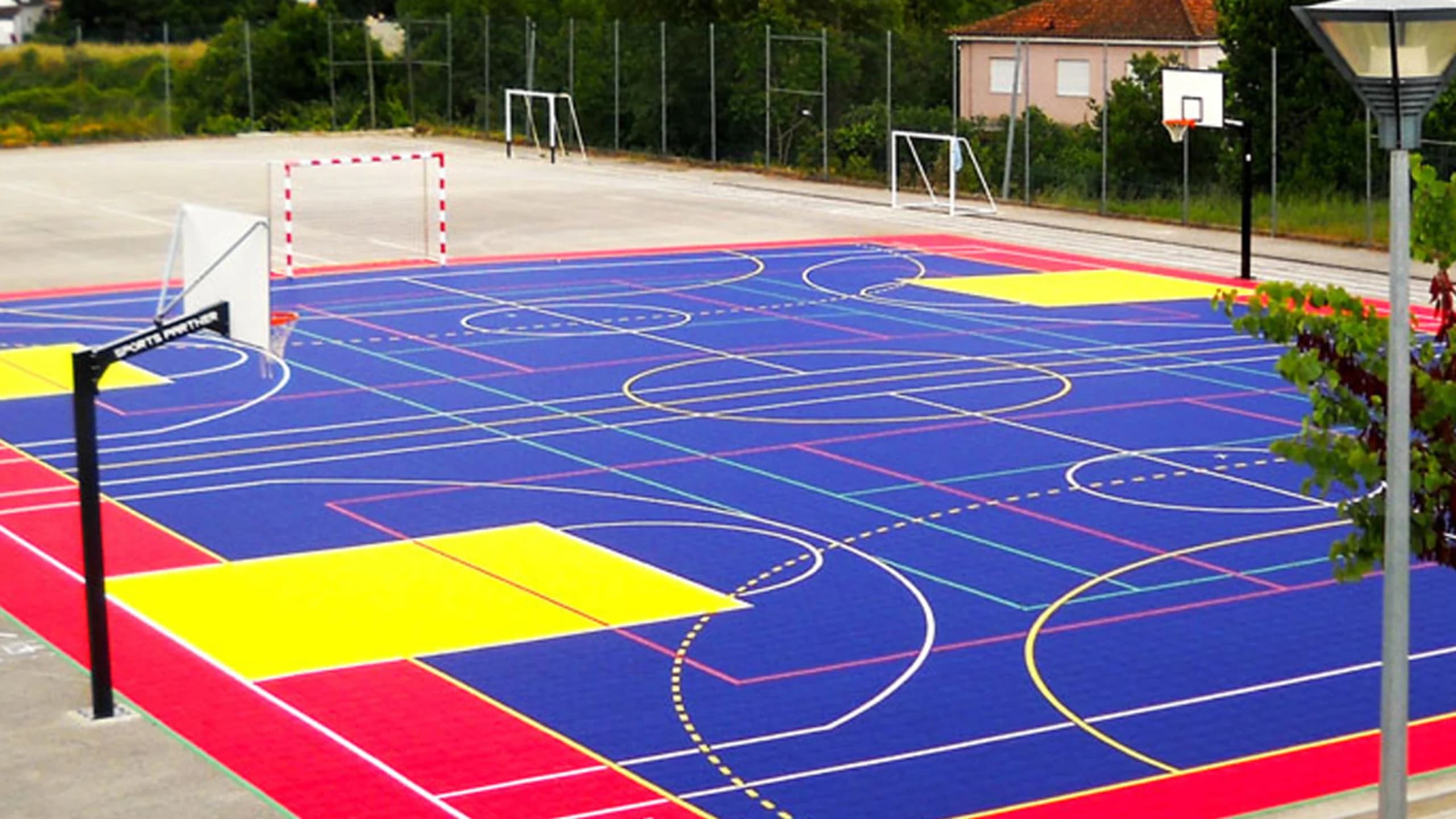
"Which surface should I build my basketball court in?" has no single answer, because the three realistic options are good at different things. The useful question is which constraints you are working under — budget, location, indoor or outdoor, and who will look after it.
Acrylic over a bound base
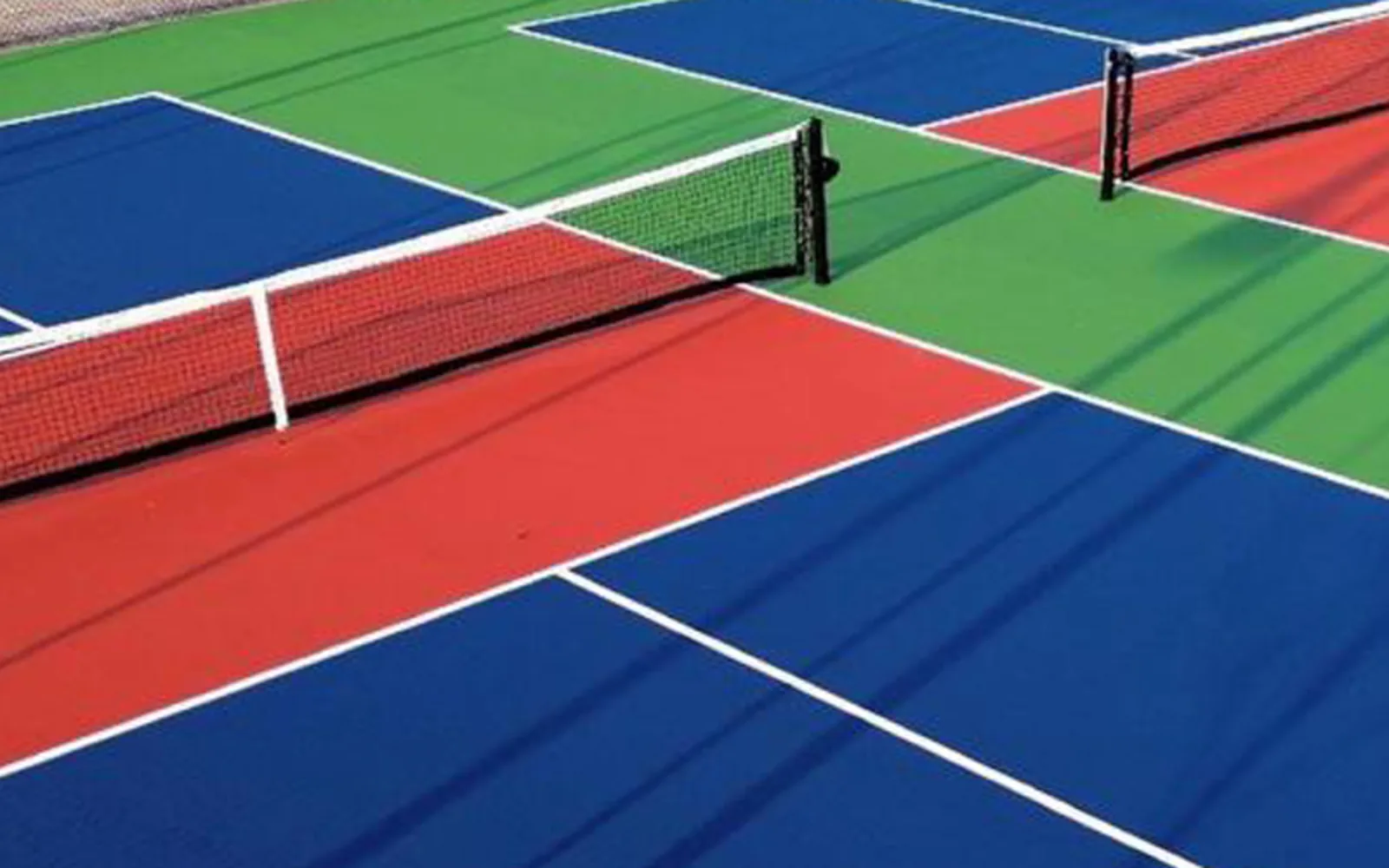
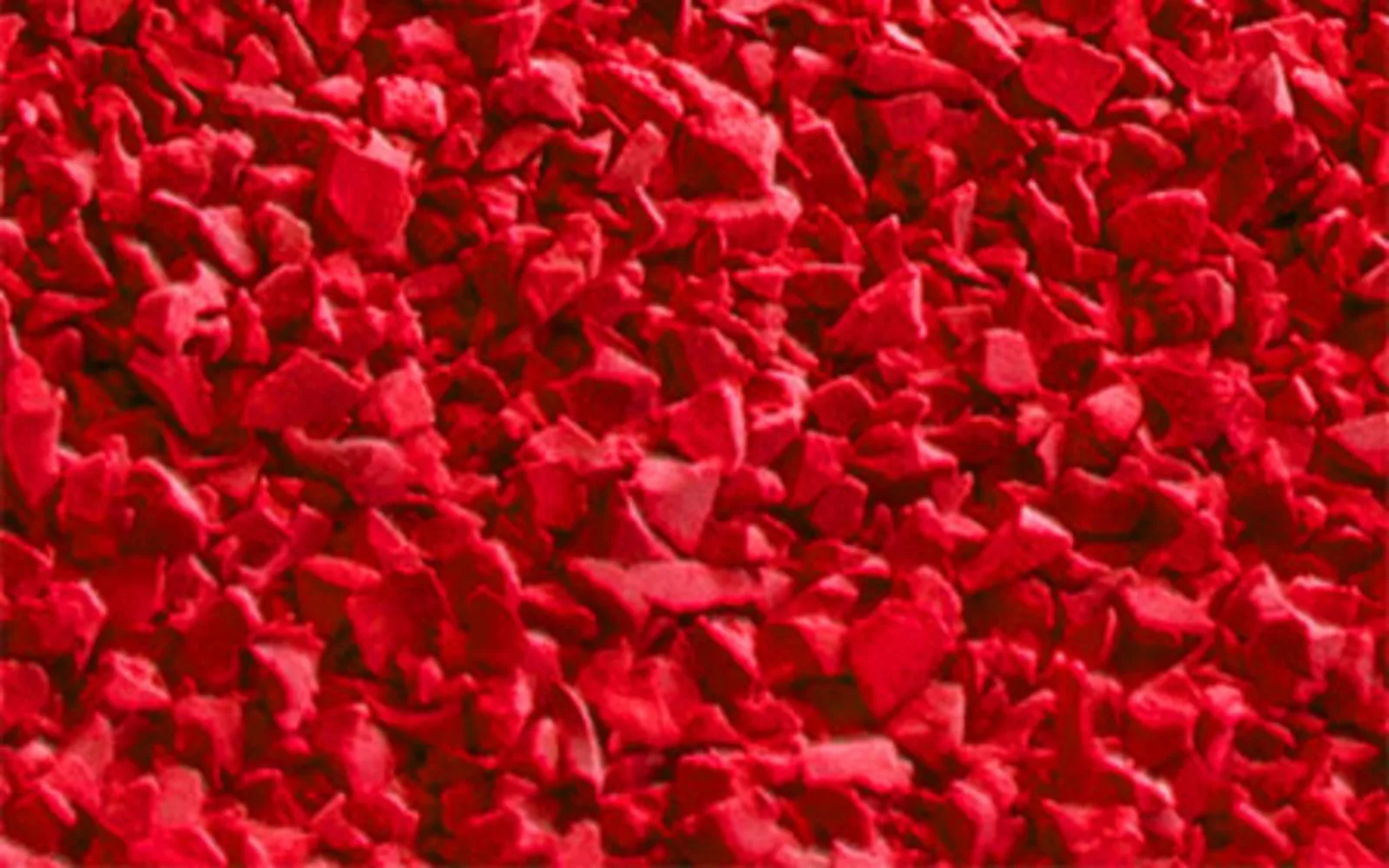
Layers of acrylic coating applied over asphalt or concrete, usually with a cushioning system built into the layer count.
Where it fits
Outdoor courts, schools, housing societies, clubs and any multi-use hard court. It is the default choice for outdoor basketball in India for good reason.
Strengths
- Handles sun, rain and temperature swings without special protection
- Lowest maintenance burden of the three — sweeping and occasional washing
- Line marking is inlaid into the system, so it does not peel off
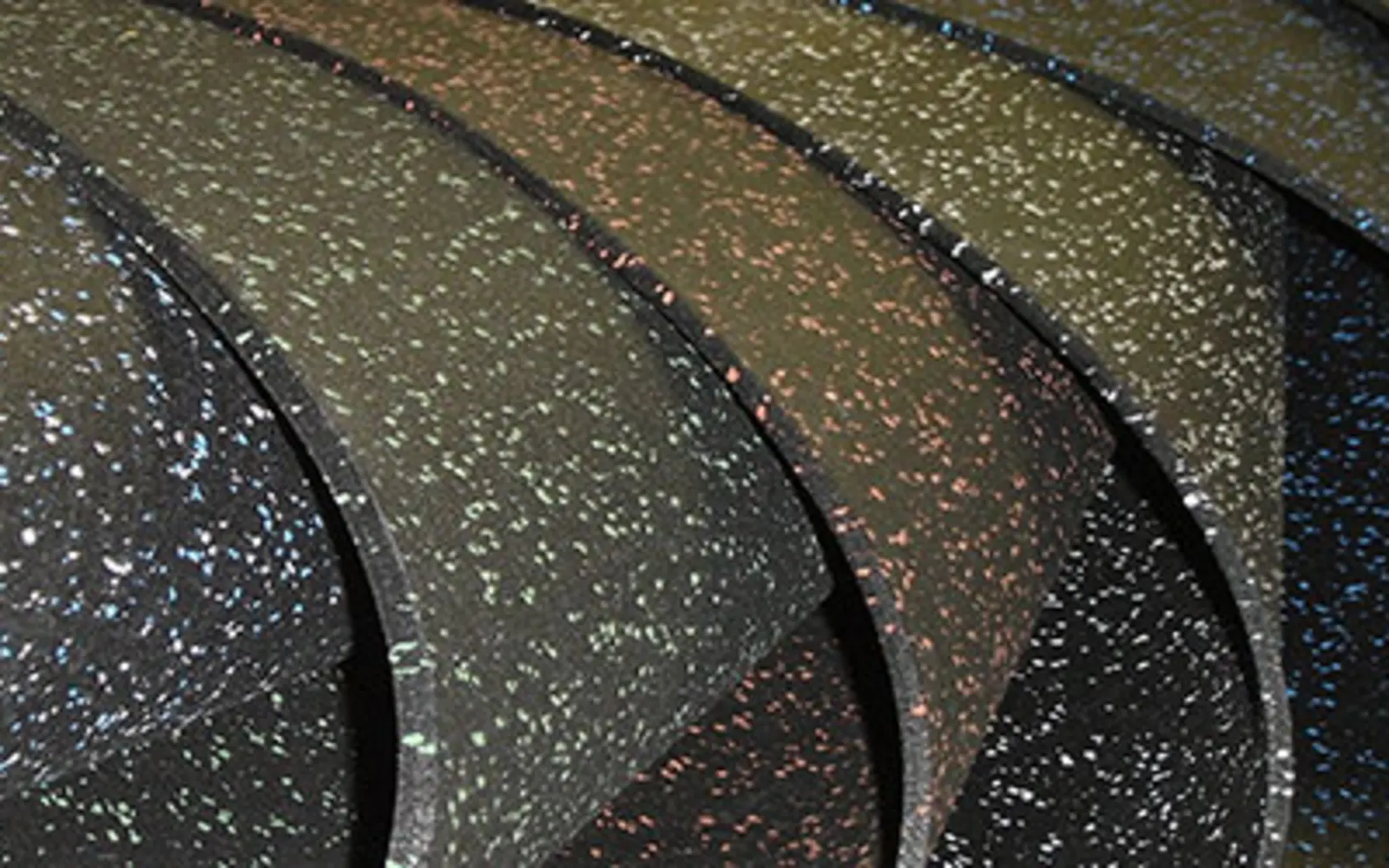
- Cushioning can be dialled up by adding layers where player comfort matters
Watch out for
Everything depends on the base. Acrylic is a few millimetres of coating; it cannot correct an uneven or cracking slab, and it will faithfully reproduce every defect underneath. Budget for the base honestly.
Wooden (hardwood) floors
Maple or comparable hardwood on a sprung sub-structure — the surface used in professional indoor arenas.
Where it fits
Indoor courts only, in a building with controlled humidity and a committed maintenance regime.
Strengths
- The best ball response and underfoot feel available
- A properly sprung system gives excellent, consistent shock absorption
- Can be sanded and refinished repeatedly, so its usable life is long
Watch out for
Highest cost by a distance, and genuinely intolerant of moisture. A roof leak or an uncontrolled monsoon humidity swing can cup or crown a hardwood floor. It also needs periodic refinishing, which means taking the court out of service.
Modular interlocking tile
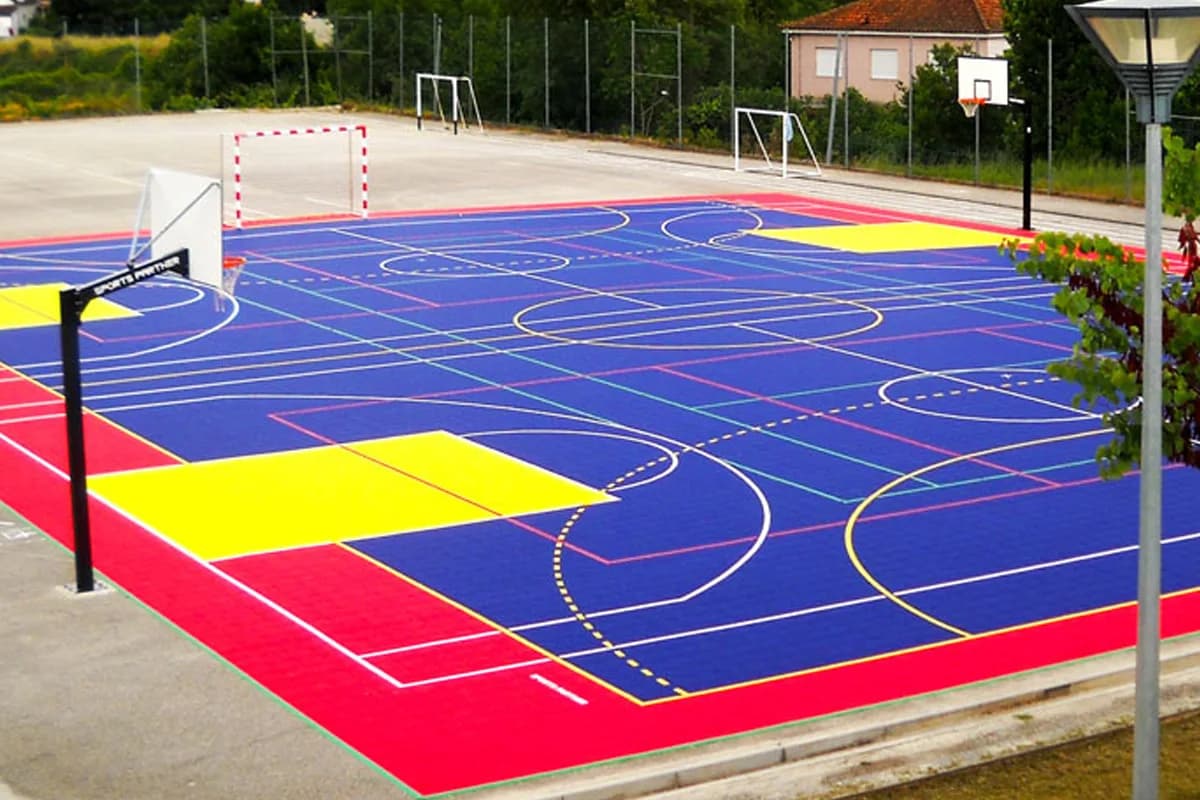
Rigid polypropylene tiles that clip together over a prepared flat base.
Where it fits
Outdoor courts where speed of installation matters, rooftop and terrace courts, temporary or relocatable setups, and sites where a wet trade is impractical.
Strengths
- Fast to install and, crucially, possible to lift and relocate
- Drains through itself, so it is playable very quickly after rain
- Individual damaged tiles can be swapped without touching the rest
- Some lateral give in the tile structure reduces joint loading
Watch out for
Ball bounce is firmer and slightly different from a coated surface, and players used to acrylic notice it. It also still needs a flat base — tiles bridge small irregularities but telegraph larger ones, and an uneven base causes clicking and premature joint wear.
A quick way to narrow it down
- Outdoor, permanent, general use → acrylic over a properly built base
- Indoor, competition standard, controlled building → hardwood on a sprung system
- Rooftop, temporary, or fast turnaround → modular tile
- Tight budget on an existing sound slab → acrylic, with the layer count adjusted to suit
The cost line nobody quotes upfront
On most courts the base work moves the final figure more than the surface choice does. A sound existing slab can make an acrylic court remarkably affordable. Open ground that needs excavation, sub-base and a new slab can cost more than the surface itself, whichever surface you pick.
That is why we ask for photographs and a rough area before quoting, and why a per-square-foot rate offered without seeing the site should be treated carefully. Send us your site details and we will price the whole court rather than just the top of it.