Playground Flooring Safety: Matching Thickness to Fall Height
Playground rubber is not specified by how it looks or feels underfoot. It is specified by the height a child could fall from — and that changes everything about the build-up.
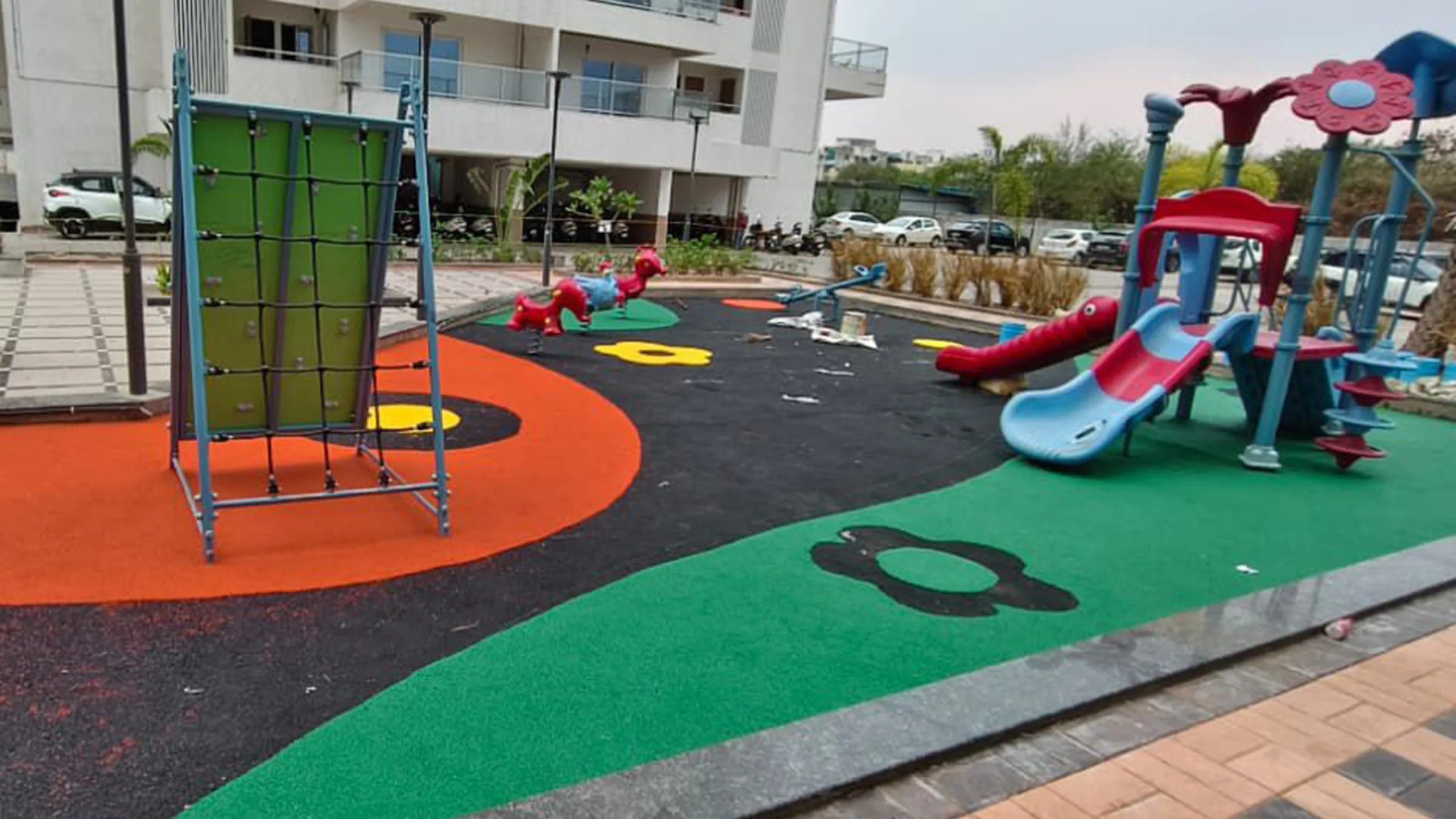
Playground safety surfacing is one of the few flooring categories where the specification is driven almost entirely by a single measurement — and it is not a measurement of the floor. It is the height of the equipment.
Critical fall height, explained simply
Critical fall height is the maximum height from which a fall onto a given surface is not expected to cause a serious head injury. It is a property of the surface build-up, tested in a laboratory by dropping an instrumented headform from increasing heights.
Every safety surface therefore has a rating, and the rule is straightforward: the surface's rated critical fall height must be at least as high as the free fall height of the equipment above it. A 2 metre platform needs a surface rated for at least 2 metres.
Free fall height is not the same as equipment height
This catches people out regularly. Free fall height is measured from the highest part of the equipment a child can reasonably stand or sit on — not from the top of the frame, and not from the ground to the roof. For a slide it is the platform. For a swing it is the seat at rest, measured differently again because of the arc. For climbing equipment it is the highest foothold.
Getting this wrong in either direction is costly: under-specify and the surface does not do its job; over-specify and you pay for depth you never needed across the whole area.
Thickness follows fall height
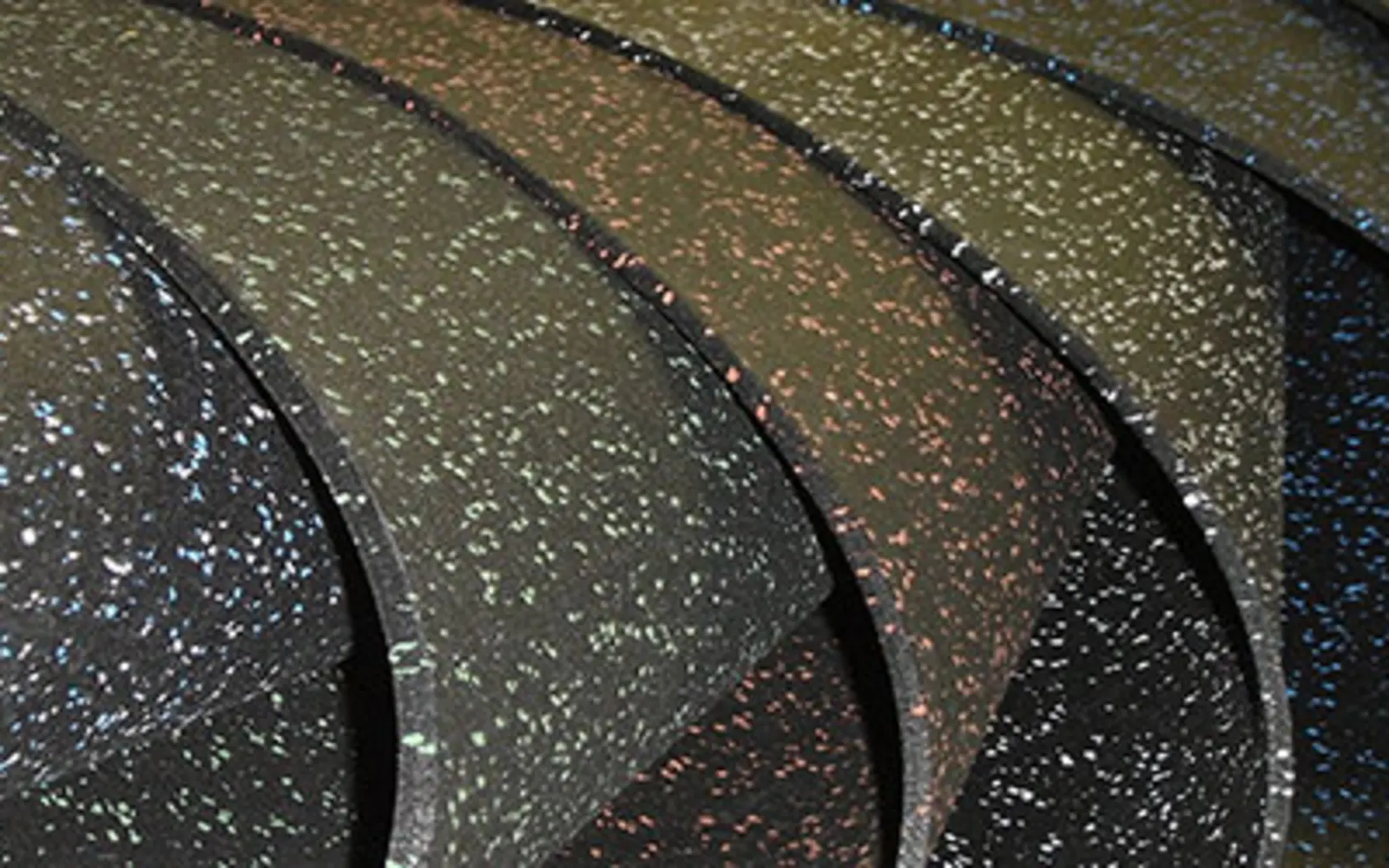
As a broad orientation, wet-pour rubber and rubber tile systems increase in thickness as the required fall height rises. Low toddler equipment may be satisfied by a relatively thin system, while tall climbing structures need a substantially deeper build-up — often achieved with a shock-pad layer beneath a thinner wearing course rather than one thick homogeneous layer.
Because the exact figures depend on the specific product, its density and how it was tested, always specify against the manufacturer's tested rating for the system being supplied rather than a generic thickness table. Two 30 mm systems from different suppliers can carry different ratings.
The impact area, not just under the equipment
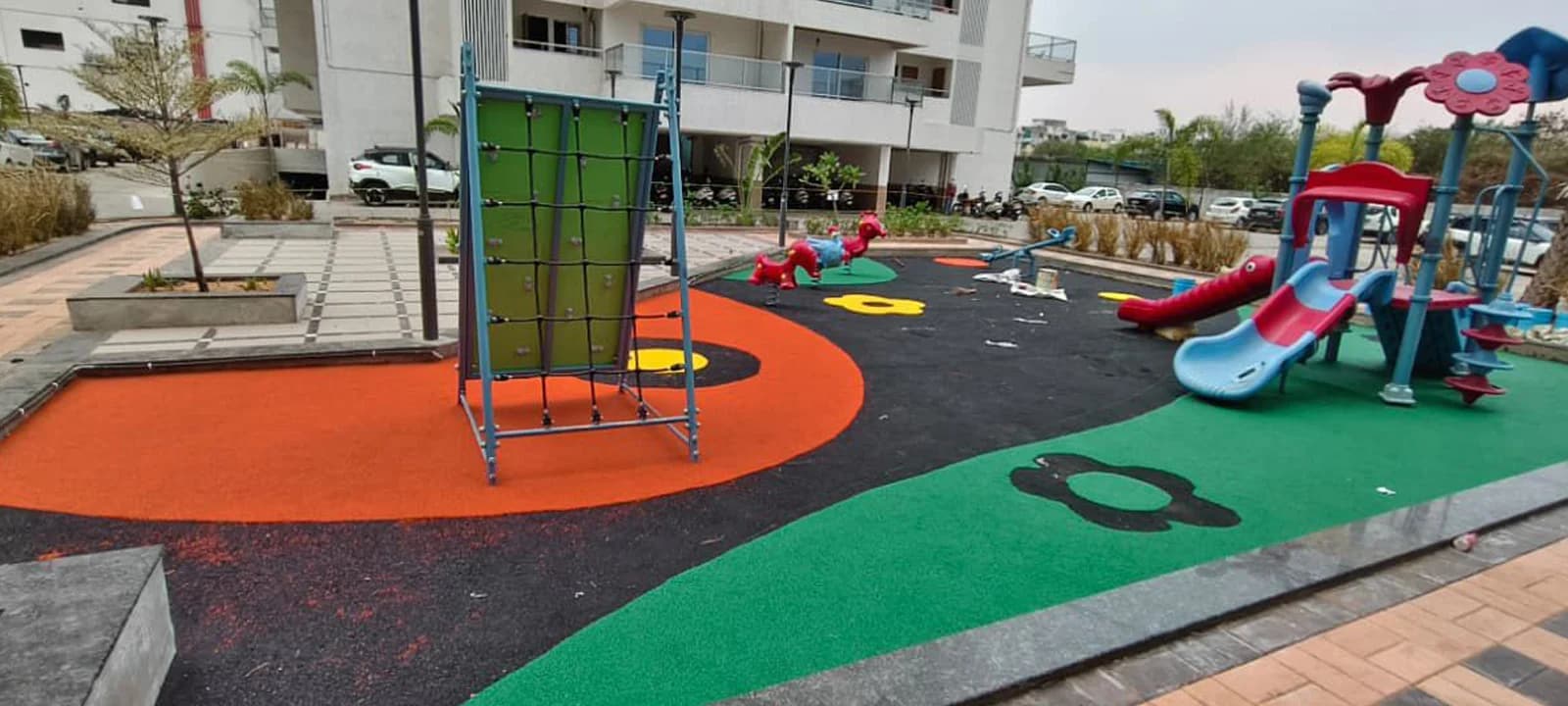
Safety surfacing has to extend across the whole impact area, which reaches outward from the equipment — further for swings and anything that generates horizontal movement. A common and expensive mistake is surfacing a neat rectangle under a frame and discovering at inspection that the impact area extends past it.
What else to get right
- Drainage. Porous wet-pour drains through itself, but it still needs somewhere for the water to go beneath. A sealed base under a porous surface creates a reservoir.
- Edges and transitions. Level changes at the perimeter are a trip hazard, and exposed edges are where wet-pour starts to lift. Detail these properly.
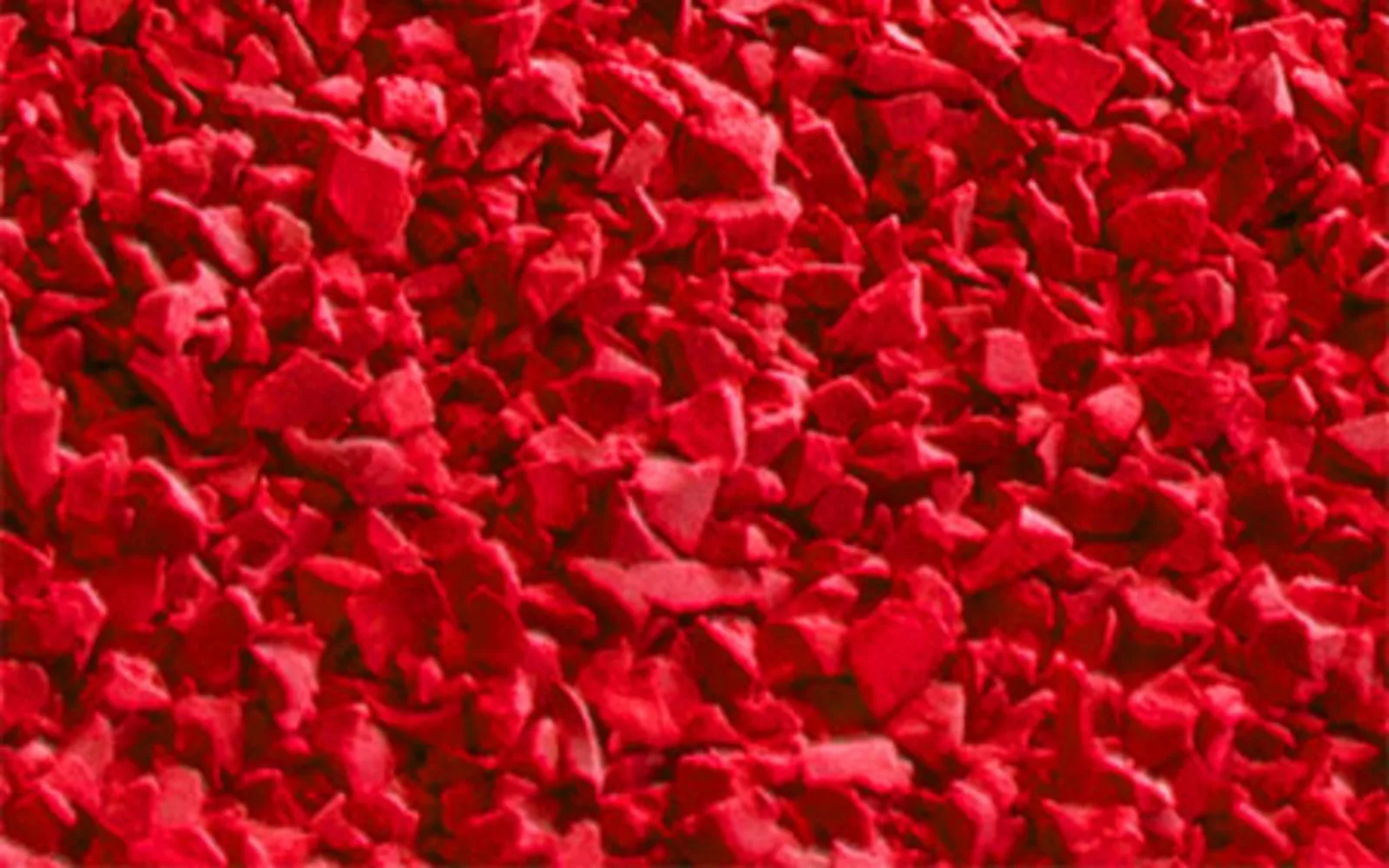
- Colour and UV. EPDM granules hold colour under sunlight far better than cheaper alternatives. On a bright playground this is very visible within a couple of years.
- Base type. Wet-pour over a bound base behaves differently from wet-pour over compacted aggregate. Both can work; they are not interchangeable.
Before you ask for a price
Have these ready and any supplier can quote you accurately: the free fall height of each piece of equipment, the total area including impact zones, whether the base is existing or new, and whether the site drains freely today. Send those to our team and we will specify a build-up rated for your equipment rather than a thickness picked off a list.